This piece was written by Petra Rihan as part of Encounters Film Festival 2026 Roaming Reporters – a talent development scheme in partnership with BFI Film Academy South West.
If I could pinpoint the exact moment when my mind was changed about short films, it would be the first twenty minutes of my first showing at Encounters Film Festival 2026.
Watching “A Soft Touch” by Heather Young set the tone for the rest of my festival experience. Sitting and watching the morbid, honest reality of a senior woman’s struggle was a peephole into someone’s life which I’d never witnessed firsthand – it was like adding to my schema for life. This experience removed any preconceptions I had about short films, drawing me in by what they achieved on a tight budget and giving voices to those deemed too “risky”. I was particularly compelled by stories centring women and pleasantly surprised that the number of films I watched with women at the forefront far outnumbered those about men – a refreshing change of pace.
Seeing these short films gave me a more honest representation of female experience than any average cinema lineup ever would. What I gathered from listening to and talking with the people involved was that the downside of having limited budgets can have the opposite effect: it encouraged them to take bigger creative risks, making something where, though the fallout could be large, the success could be huge. I watched stories unfold where I found it hard to believe there could’ve been limitations at all. I was never made aware of the challenges these filmmakers faced – I watched incredibly crafted, at times flawless, spectacular films.
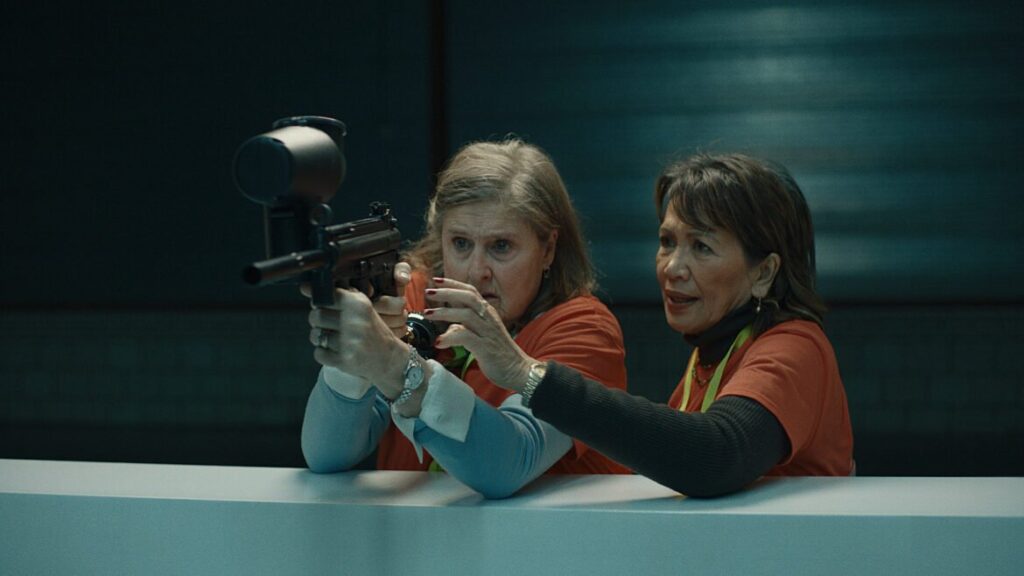
These filmmakers bravely told the stories about women they wanted to tell. The honesty and lack of restraint showed clearly. I watched stories of women young and old, women across the world, 2D women, queer women, sisters, friends, lovers. I got to see women as not just women, but people. Stories where women being women was important. But also stories where women were at the centre, unquestionably, and their story was that of whatever challenge they faced – striding through life given the ability to exist as a human rather than an inflated representation of their gender. One of the first things I noticed was the age range of the women in these films. For “A Soft Touch”, I’d never hugely considered what life truly is like at that age. “Sub5” by Laura Kavanagh and Rhona McAuliffe showcased how women above the age of sixteen are victims of incel culture too – subverting this idea of this “perfect” young victim seen constantly in media. “A Shot at Art” by Ilke Paddenburg was a raucously hilarious film which wouldn’t have landed the same way if the protagonists weren’t two scheming older women. The twist wouldn’t have been quite as cackle-inducing if not for the women’s clear bearing of men’s difficulty over the decades of their lives (I won’t spoil it; you have to see it for yourself if you ever can). As well as that, I got to see mothers and daughters with their ever-intricate challenges represented in idyllic yet jutting animation (“Death of a Fish”), emotional ambiguity (“Paper Planes”), and sisters within their entwined realities (“Happy New Year”).
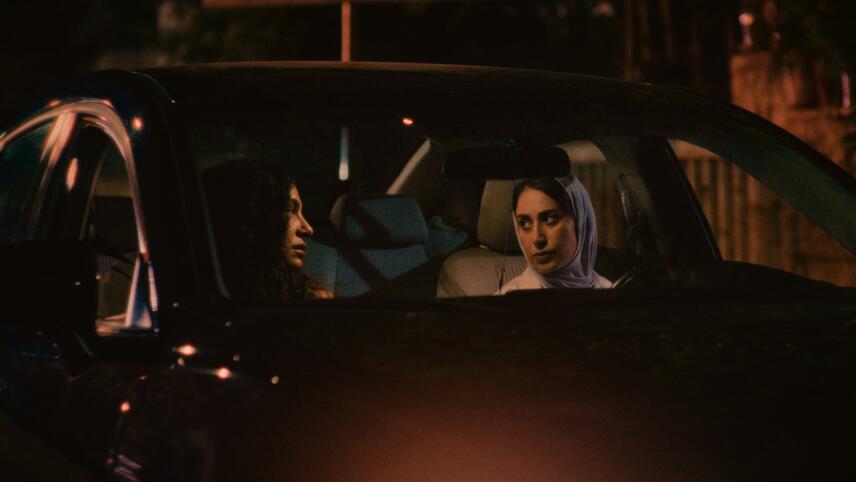
Beyond relationships, I got to see women with their feelings being explored properly, allowing all elements of complication every woman faces. In “With Tapes and Toasts in The Car”, the main character’s feelings equate to the largeness of the galaxy. Whilst I cried, I appreciated not only the story it was telling but how it allowed grief and journey to be cupped in the hands of a girl without her gendered identity having anything to do with the storyline. In “Coyotes” by Said Zagha, I was taken aback by having a queer Palestinian woman projected on the big screen in front of my eyes. We are often made to think queer women only exist in spaces we recognise; the film showed how this is never the case – queer women are everywhere. It was incredibly rousing to see representations that are genuinely rare being told. I’ve heard many times, “if I’d had this when I was younger I would’ve felt so much more empowered” etc., and this is exactly what the Encounters short films did – told the story with the voices needing to be heard, opening the world to them.
These voices aren’t always easy to hear, nor palatable! But this is imperative. In an after-screening discussion, Amrou Al-Kadhi and Janna Kemperman discussed how their films (Original Sin and Work/Werk) caused disagreements, discussions, and, for Al-Kadhi, even censorship. However, telling films around controversial topics such as sex work or morally grey Arab mothers is the point of making art in the first place.
No change occurs without talking about the hush-hush things, and no autonomy is reclaimed without allowing women to be wrong as well as being right. If you don’t explore the unexplored, and if you leave female characters entirely palatable, and you censor the tongue-tied topics, women will never get to be human – purely a poorly translated representation of an entire sex. In Rotten, director Aslı Bildirici described how she’d found men to fight at the end of arguments – in release of pent-up emotions. She awarded the women in her film the chance to fight one another, fists and all (not just with a sharp tongue, a common stereotype of women). It’s almost always men fighting on screen – Bildirici wanted to flip this. This allowance of physicality shows exactly what women in film are rarely allowed to be – loud, complicated, their feelings more than just words and tears but in their bodies, needing to come out with the grab of a collar and a shake.
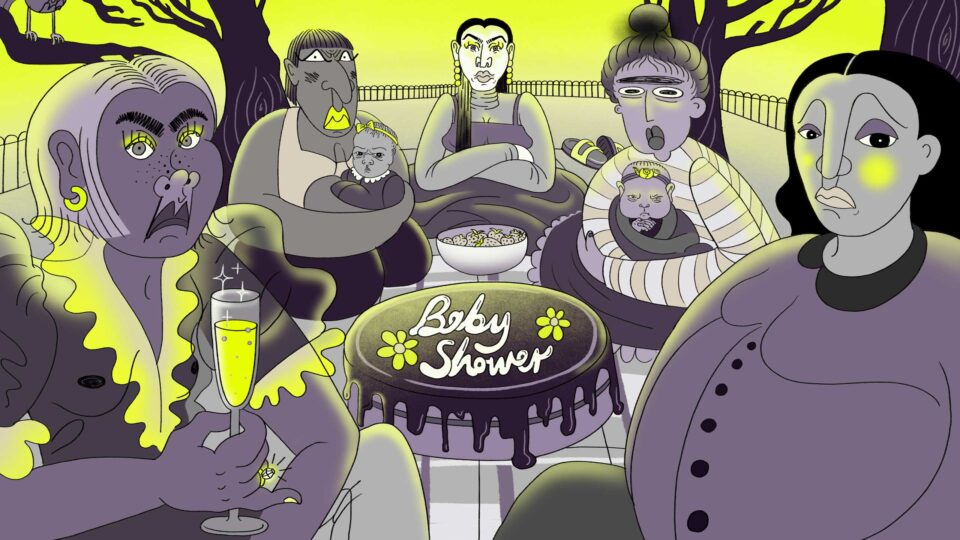
This reclamation of autonomy is taken further than physical violence. Gaia (Gwenola Heck), through beautiful animation, shows a literal regaining of physical autonomy by portraying the character’s choice to remove her fertility. Forefronting this anatomically correct female body without centring the purpose of motherhood and showing the brilliance of a body beyond the womb reminds audiences that women and their bodies are far more than that of just creating life, because our body holds life enough as it is. Finally, Anna Ginsburg’s Hag (an Encounters award winner) drove home reclamation of autonomy through raw visual representation of womanhood. Nakedness, grossness, insecurities and emotion, animated with such personality-filled zing, the film did not hold back. Unapologetic, the film didn’t care for discomfort, and it delivered confidently exactly what it wanted. Ultimately, the takeaway was an important one for women, something not often told – to love yourself, exactly as you are.
All in all, I stepped away deeply moved, empowered and impressed. For me, it represented exactly why we make films. To represent a truthful human experience – and letting this be as true for women as it was for men. These films will stay in my memory for a long time. If you ever get the chance to go, I can’t emphasise how highly I recommend it – I can guarantee a set of films you’ll never have seen anything like in your life.
