Tickets for this event will be available to book soon. 

Drop in to interact with pop-up artworks and installations, sign-up for hands-on workshops and creative activities, attend discussions or participate in conversations about the Nowism artworks, which will spark ideas and questions about how technologies shape our lives.  
 
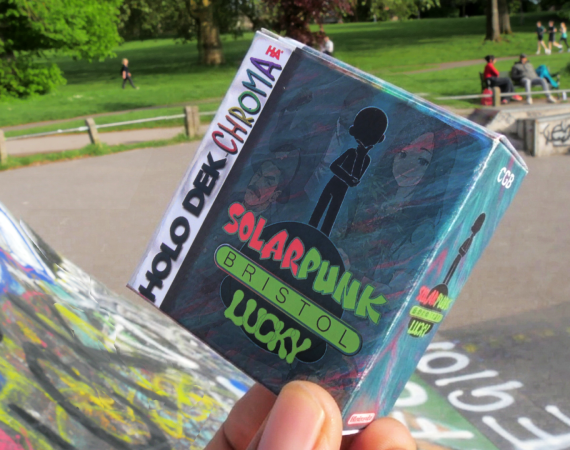
Explore emotion sensing technologies, design masks for the face of AI, follow your digital footprints, play with time together to save the future of tech, imagine robotic futures for a Solar Punk Bristol. Take a walk into the future of Watershed or talk to a chat bot to imagine a cultural centre in 50 years to come. Interpret omens with an AI oracle and divine futures in the patterns of birds. Play a roleplaying game rooted in disabled experience about resisting big tech AI. Explore community technology and organising through the craft of quilting. 
 
A menu of artworks, workshops, walkshops, games, and talks/conversations by artists and researchers including: Joseph Wilk, Mother Cyborg, Matt Dowse, Gaston Welisch, Future Places Toolkit, Abbi Bayliss, Debbie Watson, Lisa May Thomas, Helen Manchester, Marisela Gutierrez Lopez and Rich Hemming, Jessica Pykett and Rachel Smith, Annette Markham and Beckie Coleman, Keri Facer and Harriet Hand, Razanne Abu-Aisheh and Sabine Hauert, Creative Sustainability and Stand + Stare. 
 
Join us to interact with more works, discuss ideas inspired by the Nowism exhibition, question big promises made about the future of technology, and get involved in making more socially and environmentally just futures.
 
The programme aims to spark conversation, challenge assumptions, and inspire imagination about alternative futures for technologies in our lives. 
 
This event is curated and convened by researchers and creatives from the ESRC Centre for Sociodigital Futures at University of Bristol.  


The work in the Nowism exhibition was developed during a residency alongside researchers at the University of Bristol’s ESRC Centre for Sociodigital Futures. The exhibition is supported by MyWorld, a creative technology programme funded by UK Research and Innovation’s (UKRI) strength in Places Fund (SIPF) and is part of the Unfinished at Undershed programmme. The support of the Economic and Social Research Council (ESRC) is gratefully acknowledged. Grant reference ES/W002639/  1