

Adam Nelson Bristol Palestine Film Festival Trustee
on Mon 23 NovBearing Witness: Why we're asking you to bring a friend to BPFF 2026
Posted on Mon 23 Nov
Hear from one of the trustees of the Bristol Palestine Film Festival on the central theme of this year's programme and some of the screenings, discussions and events they have in store for this edition.
Over the past three years the destruction in Gaza has reached far beyond homes and hospitals, into the places where a people keeps its memory.
Culture is how a people holds on to who it is from one generation to the next, which goes some way to explaining why it so often becomes a target. A film festival in Bristol is obviously not going to rebuild a library in Gaza City, and we would never pretend otherwise. What it can do is keep Palestinian filmmakers on screens and in conversation, so that their work reaches audiences it might otherwise never find, while holding open a space in this city where hearing Palestinian voices feels ordinary rather than exceptional. That might sound modest, but small acts of cultural survival add up over time, and they matter most at moments when so much else is being lost.
That thinking sits behind this year's theme, TESTIMONY. A testimony is a first-hand account from someone who was there, but it is only complete once somebody receives it and takes it seriously, which means that listening carries a weight and a responsibility of its own. Across twelve days and five venues, from 25 November to 6 December, the festival brings together filmmakers and artists who are speaking about what they have seen and lived through, and it asks the people in the room to take on the other half of that work. One of the directors in this year's programme, Nicolas Wadimoff, the auteur behind Who Is Still Alive, (playing at the Cube on Wednesday 2 December) describes his audience as spectators "who will become witnesses", which is about as good a description of what we hope happens in the cinema as we could have written ourselves.
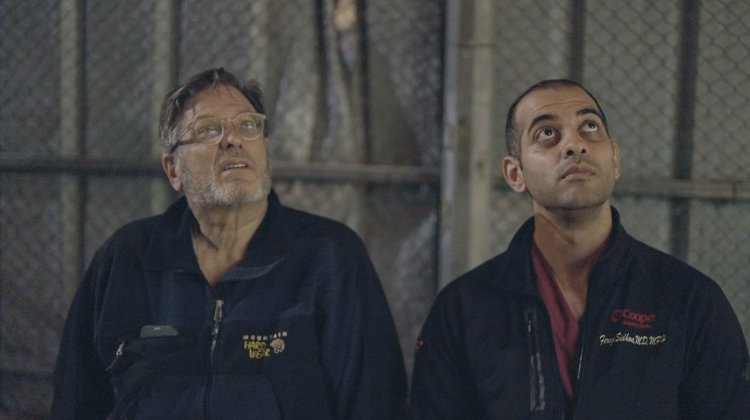
American Doctor
Testimony takes plenty of different forms across the programme, and a few of the films showing at Watershed give a sense of how wide that range is. American Doctor, which opens the festival on 25 November, follows three American physicians who volunteered in Gaza's hospitals, and much of its force comes from what happened when they came home and tried to tell people what they had seen, only to be met with disbelief.
Revolutionaries Never Die looks back in order to look forward, as the archivist and filmmaker Mohanad Yaqubi pieces together the life of the Lebanese director Jocelyne Saab from her own footage and voice, preserving her record of the Palestinian revolution in the 1970s and of places and people that no longer exist.
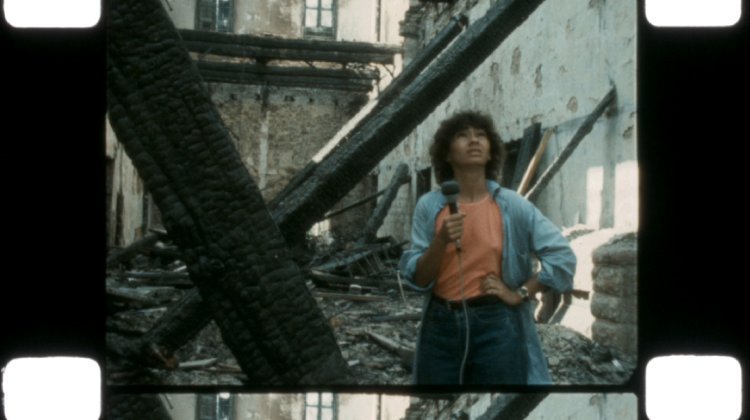
Revolutionaries Never Die
Landscapes of Memory brings the question much closer to home for a European audience, following a granddaughter of Holocaust survivors in Berlin as she works out how to carry her family's story after being detained while filming a pro-Palestine demonstration and charged with antisemitism.
In Muayad Alayan’s Conversation with the Sea, a father searching for answers about his son’s disappearance faces another question that runs through this year’s programme: whose account is believed?
Between them, these films show that testimony can be carried a long way from the moment it was first given, and the full programme has a great deal more to offer. 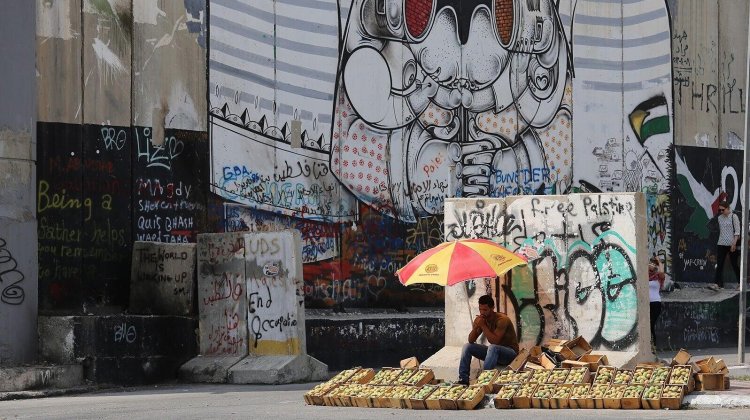
Palestine Through the Lens: Photography Exhibition
Some of the festival's most memorable moments happen away from the screen. A photography exhibition at The Island runs alongside the films and offers a slower, quieter way into the same questions, which makes it well worth an hour of your time between screenings. Poetry has long been one of the most powerful vehicles for Palestinian testimony, and our poetry night with Lowkey and guests brings that tradition into a Bristol room with all the energy you would hope for. On Saturday 5 December the musician Saied Silbak spends the morning running workshops for children, giving the next generation a chance to discover Palestinian music by making it themselves. He returns for a solo performance at The Island that evening, and if you want to see what the festival looks like when it turns into a gathering rather than an audience, that night is the one to come to.
Which brings us to the real point of this piece. If you have been to the festival before, you already understand why it matters, and you are probably not the person we most need to reach. The people who make the biggest difference are the ones who would not normally think of buying a ticket for a Palestinian film, whether that is a colleague who has only followed the news from a distance or a relative who has never given it much thought at all. So this year we are asking everyone who already cares about the festival to bring one of those people along, and our opening night screening of American Doctor would make a good first visit. Nobody is asking you to recruit anyone or win an argument over dinner afterwards, only to give someone the chance to sit in the dark for an hour and a half and listen, which is all that testimony has ever really asked of any of us.
The festival runs from 25 November to 6 December at Watershed, The Island and other venues across Bristol, and the full programme is at bristolpff.org.uk. Donations collected this year go to our charitable partners, Taawon and Film Lab Palestine. We hope to see you there, and we hope even more that you bring someone new.